

Planning Full Mouth Dental Implants: Bone Health, Bite Design, and Long-Term Care
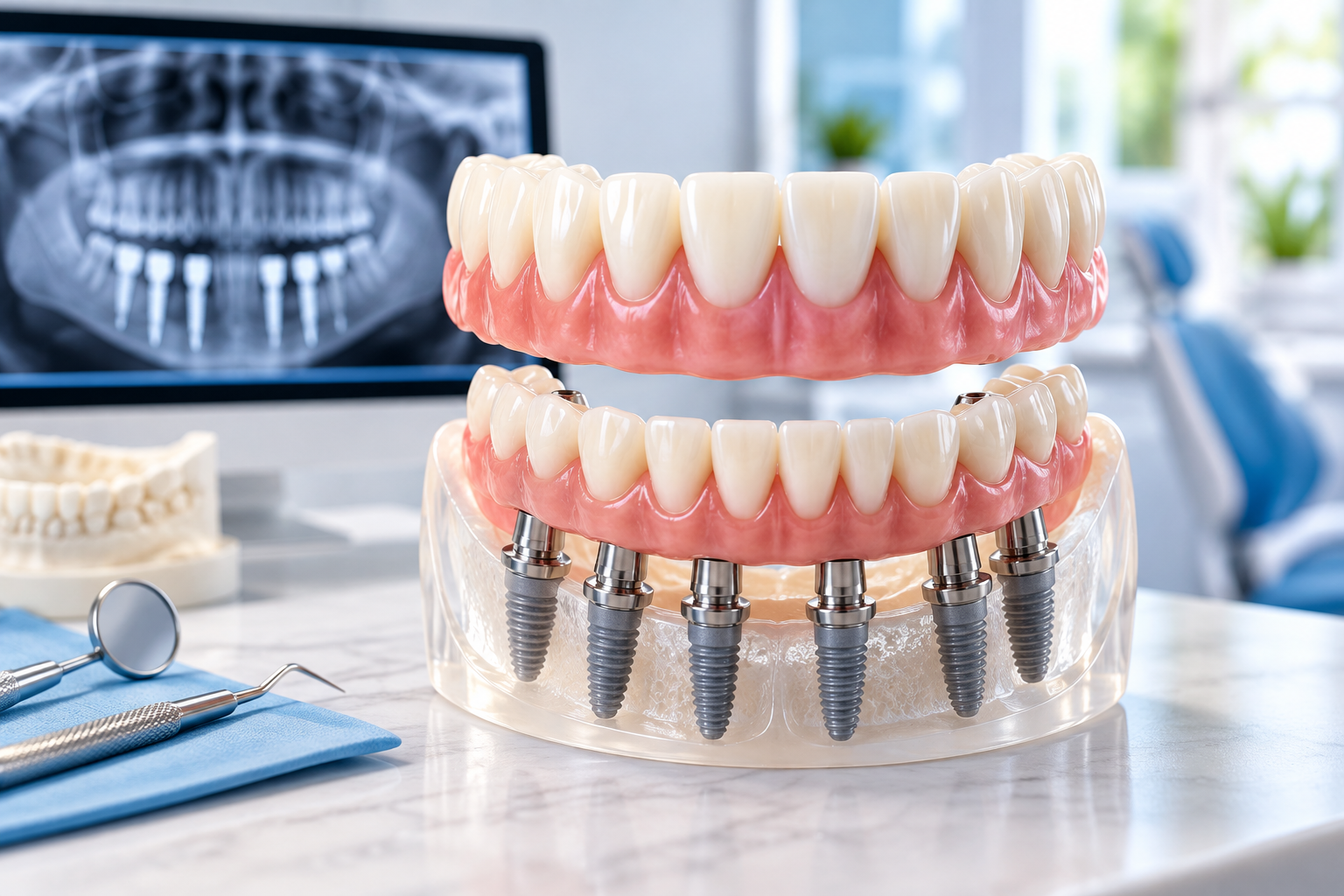
Replacing most or all teeth involves more than choosing replacement teeth. A full-mouth implant plan must account for the jawbone, gum tissues, bite, appearance, daily cleaning, and the way the final restoration will be supported.
Full mouth dental implants may be considered when many teeth are missing or when remaining teeth have extensive damage and cannot be predictably restored. Careful planning helps determine which approach may be appropriate for each patient.
Why Planning Matters Before Implant Placement
Implants and the replacement teeth they support need to work together. Their positions affect how chewing forces are distributed, how the restoration looks, and how easily the area can be cleaned.
A treatment plan should consider the condition of the mouth and the needs of the planned restoration. This may include evaluating teeth that could be preserved, infection or gum disease, available bone, the bite, and the patient’s ability to maintain the final teeth.
1. Assessing Bone and Gum Health
Implants are placed in the jawbone, so the amount and quality of available bone are important planning factors. Tooth loss can be followed by changes in the bone. An examination and dental imaging help the team assess the anatomy and plan implant positions.
Gum disease or infection may need treatment before implant placement. In some cases, preparatory procedures or alternative plans may be discussed. Limited bone does not automatically rule out treatment; options depend on the patient’s anatomy, health history, and planned restoration.
2. Deciding Which Teeth to Keep or Replace
When several teeth are damaged, it may seem easiest to remove them all, but each tooth should be evaluated. Some may be suitable for treatment and preservation, while others may have damage or disease that makes long-term restoration less predictable.
Your dentist should explain the condition of the remaining teeth, the reasons for any recommended extractions, and whether alternatives are reasonable. This helps you understand the purpose of each part of the plan before making a major decision.
3. Designing the Bite and Final Restoration
The final teeth need to fit the patient’s bite and work with surrounding oral structures. The dentist considers how the upper and lower teeth meet, how chewing forces are directed, and how the restoration will function during everyday activities.
The design also affects appearance, speech, and cleaning access. A restoration that looks natural but is difficult to clean may create maintenance challenges. Implant number and position are planned around the patient’s anatomy and the restoration design, rather than one fixed arrangement for everyone.
4. Understanding Temporary Teeth and Treatment Stages
Some treatment plans include temporary replacement teeth during healing; others follow a different sequence. Whether temporary teeth can be provided, and when they can be used, depends on factors such as implant stability, bone conditions, restoration type, and the clinician’s assessment.
Ask what you will be able to wear or eat during each stage, how long healing may take, and whether restrictions are expected. Temporary teeth are not always the same as the final restoration. Do not assume every patient can receive fixed teeth immediately; timing must be determined for the individual case.
5. Comparing Fixed and Removable Implant-Supported Options
Some implant-supported solutions are designed to remain fixed in place, while others are made to be removable by the patient or dental professional.
The options differ in cleaning methods, maintenance, feel, and design. A fixed restoration may require special tools to clean beneath it. A removable design may make some cleaning tasks easier, but has its own handling and maintenance requirements.
Ask which design is proposed, why it may suit your needs, how it should be cleaned, and what maintenance visits are expected.
6. Planning for Healing and Recovery
Healing time can be influenced by the number and location of implants, bone quality, general health, smoking, gum condition, and whether additional procedures are needed.
Your dental team should provide instructions for eating, oral hygiene, activity, and follow-up visits. Contact the practice if you notice increasing swelling, persistent bleeding, worsening pain, or movement in the restoration. Recovery varies, so ask what is expected for your procedure and which symptoms should prompt a call.
7. Long-Term Cleaning and Professional Maintenance
Implant-supported teeth do not decay like natural teeth, but the surrounding gums and bone still need care. Plaque can collect around implants and restorations, and inflammation in the surrounding tissues can threaten their health.
Home care may include brushing, cleaning between the teeth, and using tools recommended for the specific restoration. Regular professional reviews allow the dental team to monitor the gums, restoration, bite, and implant stability. Report bleeding, swelling, persistent discomfort, changes in how the teeth fit together, or looseness promptly.
8. Understanding the Full Cost of Treatment
The total cost depends on the treatment required, not simply the number of implants. Factors may include imaging, extractions, preparatory procedures, implant placement, temporary teeth, the final restoration, materials, and follow-up care.
Ask for a written breakdown of what is included and what could create additional costs. Clarify whether temporary restorations, final teeth, maintenance appointments, and repairs are included. Compare the full scope of care rather than the initial price alone.
Questions to Ask at Your Implant Consultation
Before beginning treatment, consider asking:
- Which teeth, if any, can be preserved?
• Why is this implant arrangement recommended for my mouth?
• What imaging or examinations are needed?
• Do I need gum treatment, extractions, or bone-related procedures first?
• What type of temporary and final restoration is planned?
• What can I eat during each stage?
• How should I clean the restoration at home?
• What is included in the written cost estimate?
• What maintenance visits and future repairs may be needed?
• What alternatives should I consider?
The answers should be specific to your dental condition and help you understand both the expected benefits and limitations.
Who May Be Suitable for Full Mouth Dental Implants?
People with extensive tooth loss or multiple teeth that cannot be predictably restored may be able to explore full-mouth implant treatment. Candidacy is not determined by tooth loss alone.
Bone and gum health, general health, medications, smoking, oral hygiene, healing capacity, and treatment goals may affect planning. Some patients need treatment for existing oral health problems before implants can be considered. Others may be better served by a different restoration. A comprehensive examination is the appropriate way to understand the options.
Frequently Asked Questions
Does everyone receive temporary teeth during treatment?
No. Temporary teeth and their timing depend on the treatment plan, implant stability, bone conditions, and the clinician’s assessment. Ask what your specific plan includes before treatment begins.
Are fixed implant-supported teeth easier to maintain?
Fixed restorations still require careful daily cleaning and professional maintenance. Your dental team should show you how to clean the specific design being used.
Can bone loss affect the implant plan?
Yes. The amount and location of available bone can influence implant positioning and whether preparatory procedures or alternative approaches should be considered.
How long does full mouth implant treatment take?
There is no single timeline for every patient. Examination, preparatory treatment, implant placement, healing, and final restoration all affect the schedule. Your dentist can estimate the timeline after assessing your needs.
What symptoms should I report after treatment?
Contact your dental team if you experience persistent or worsening pain, swelling, bleeding, difficulty chewing, or movement around an implant or restoration. Follow any urgent-care instructions provided by your clinician.
Making an Informed Decision About Full Mouth Dental Implants
Full mouth dental implants require coordinated planning for the jawbone, gums, bite, restoration design, healing, and long-term maintenance. Understanding these factors can help you ask useful questions and evaluate whether a proposed plan fits your needs.
If you are exploring whole mouth dental implants, arrange a comprehensive evaluation with a qualified dental professional. Ask for an explanation of the recommended approach, alternatives, timeline, maintenance needs, and estimated total cost before deciding how to proceed.
NorCal Dental Care provides information about dental care and tooth-replacement options. Visit https://www.norcaldentalcare.com/ to learn more and discuss your individual needs with the practice.