

Full Mouth Dental Implants: Understanding Complete Tooth Replacement
When a large number of teeth are missing or severely damaged, replacing each tooth independently may not be the most suitable way to approach treatment. A dentist may instead discuss a full-mouth implant plan that addresses the teeth and supporting structures as a larger system.
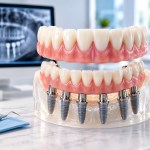
Full mouth dental implants can be used to support replacement teeth when most or all teeth in an upper arch, lower arch, or both arches need to be replaced. The exact design depends on the condition of your mouth and the restoration being planned.
If you are researching full mouth dental implants, understanding the treatment process, candidacy, timeline, maintenance, and cost can help you prepare for a more informed discussion with your dentist.
What Are Full Mouth Dental Implants?
Full mouth dental implants are a tooth-replacement approach for people with extensive tooth loss or severely compromised teeth. Dental implants are placed in the jaw and can later support a larger replacement-teeth restoration.
A full-mouth plan does not necessarily mean placing one implant for every missing tooth. Instead, the implant positions and number are planned to provide appropriate support for the intended restoration.
The final plan can be affected by the number of teeth that need replacement, the condition of the remaining teeth, available jawbone, gum health, and whether one or both arches are being treated.
Who Might Consider Full Mouth Dental Implants?
Full mouth treatment may be discussed when a patient has extensive tooth loss or multiple teeth that are no longer suitable for predictable restoration.
Situations that may lead to a discussion about full-mouth implants include:
- Most or all teeth are missing
- Several teeth have extensive damage
- Some teeth cannot be predictably restored
- Missing or damaged teeth are affecting chewing
- An existing removable denture is difficult to use or keep stable
- The patient wants to explore an implant-supported replacement
These factors do not automatically make someone a candidate. A dental examination is needed to determine what treatment options are appropriate.
How Does Full Mouth Implant Treatment Work?
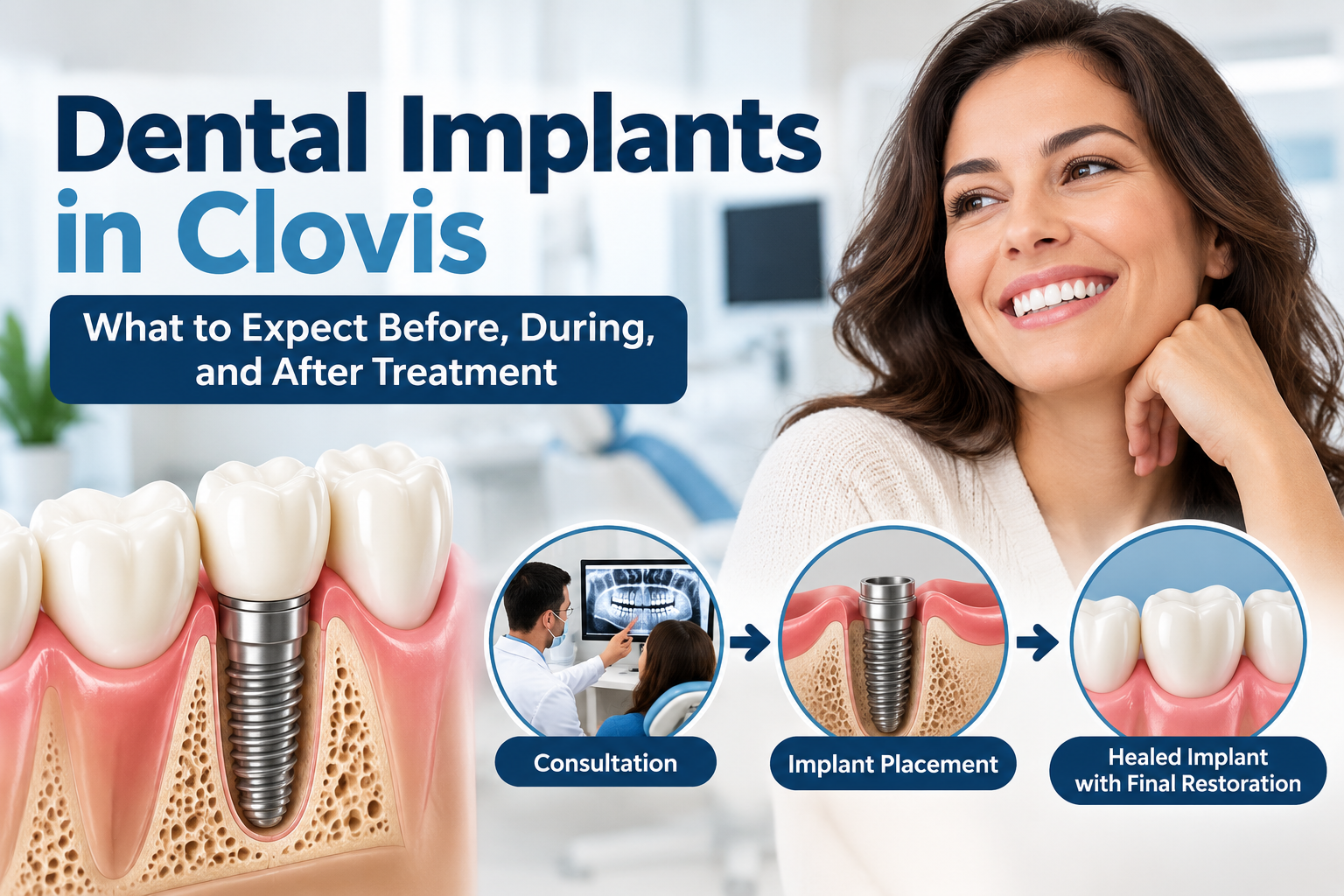
Full-mouth treatment usually involves several stages. The sequence and timing can differ depending on the patient’s dental condition and the type of restoration being planned.
1. Examination and Imaging
Your dentist first evaluates the current condition of your teeth, gums, bite, jawbone, and other structures relevant to treatment. Dental X-rays or other imaging may be used to assess available bone and important anatomical structures.
2. Treatment Planning
The findings are used to create an individualized treatment plan. This may involve deciding which teeth should be replaced, which teeth may be worth preserving, where implants can be placed, what restoration will be used, and whether preparatory procedures are needed.
3. Implant Placement
The planned implants are placed in selected areas of the jawbone. Their number and position depend on the restoration design and the amount and quality of available bone.
4. Healing
After placement, the implants need time to heal and become stable within the surrounding bone. The length of this stage varies from patient to patient.
5. Final Restoration
Once the implants have reached the appropriate stage of healing, they can be used to support the planned replacement teeth. Your dentist will explain the expected sequence and timeline for your specific treatment.
Full Mouth Implants vs. Single Dental Implants
The two approaches are intended for very different patterns of tooth loss.
Single Dental Implant
A single implant is generally used when one tooth is missing. It can support an individual crown designed to replace that tooth.
Full Mouth Dental Implants
Full-mouth treatment is more extensive and may involve multiple implants supporting a larger restoration when many teeth need to be replaced.
For example, replacing one missing tooth may require a much smaller treatment plan than replacing most teeth in an arch. The appropriate choice depends on the patient’s actual dental condition, not simply on how many teeth they want replaced.
Are Whole Mouth Dental Implants the Same as Full Mouth Dental Implants?
The terms whole mouth dental implants and full mouth dental implants are often used to describe comprehensive implant treatment for people with extensive tooth loss.
However, the terminology does not determine the actual treatment. A plan may involve one arch or both arches, different implant positions, different restorations, and additional procedures depending on the patient’s anatomy and remaining teeth.
For that reason, the important question is what treatment is being recommended and why, rather than which term is used to describe it.
Potential Benefits of Full Mouth Dental Implants
For appropriate candidates, a full-mouth implant restoration may offer several potential benefits.
Improved Chewing
Replacing severely damaged or missing teeth can help restore useful chewing function.
A More Complete Smile
A full set of replacement teeth can address extensive tooth loss and create a more complete appearance.
Implant-Based Support
Because implants are anchored in the jaw, an implant-supported restoration is supported differently from a traditional removable denture.
A Coordinated Treatment Plan
When many teeth need to be replaced, the dentist can plan the replacement teeth together rather than treating each missing tooth as an unrelated problem.
The expected benefits vary between patients, so your dentist should explain what is realistic for your particular situation.
What Can Affect the Cost of Full Mouth Dental Implants?
There is no single cost that applies to every full-mouth implant case. Treatment can vary substantially depending on what needs to be done before, during, and after implant placement.
Factors that may affect the overall cost include:
- Number of implants required
- Whether one arch or both arches are being treated
- Condition of the remaining teeth
- Amount and quality of available jawbone
- Extractions that may be necessary
- Bone-related or other preparatory procedures
- Type of final restoration
- Number of treatment visits
- Materials used for the restoration
- Other procedures included in the treatment plan
Because of these variables, a meaningful estimate requires an evaluation of your mouth. Ask your dental team for a clear breakdown of the proposed treatment and what is included in the quoted cost.
Do You Need Enough Jawbone for Dental Implants?
Adequate supporting bone is an important part of implant planning because the implants are placed within the jaw. When teeth have been missing for a long time, the bone in those areas may have changed.
Limited bone does not automatically rule out implant treatment. Depending on the individual situation, your dentist may discuss additional procedures or another implant placement strategy.
Imaging helps the dental team evaluate the available bone and plan treatment around the relevant structures.
How Long Does Full Mouth Implant Treatment Take?
There is no universal timeline for full mouth dental implants. Some patients need treatment before implants can be placed, and the implants also require a healing period before the final restoration is completed.
Treatment may include:
- Examination and imaging
- Treatment planning
- Preparation of the mouth
- Removal of teeth when necessary
- Implant placement
- Healing and integration
- Placement of the final restoration
- Follow-up appointments
After evaluating your individual needs, your dentist can give you a more specific estimate of how long the process may take.
How Do You Care for Full Mouth Dental Implants?
Implant-supported teeth still require ongoing oral care. Although the replacement teeth themselves do not develop cavities in the same way natural teeth do, the gums and tissues around the implants still need to stay healthy.
Your maintenance routine may include:
- Brushing regularly
- Cleaning between the teeth and around the restoration as instructed
- Keeping routine dental examinations
- Having professional cleanings when recommended
- Following the cleaning instructions provided by your dental team
- Reporting swelling, bleeding, discomfort, looseness, or other changes
Consistent maintenance is an important part of protecting the condition of the implant-supported restoration over time.
Are Full Mouth Dental Implants Better Than Dentures?
There is no universal answer. Traditional dentures and implant-supported restorations are designed differently and may suit different patients.
Dentures are removable, while implant-supported teeth use dental implants for support. The right option depends on factors such as oral health, treatment goals, budget, jawbone condition, and the type of restoration being considered.
Rather than assuming one treatment is better for everyone, discuss the benefits, limitations, maintenance requirements, and alternatives with your dentist.
Questions to Ask Before Full Mouth Implant Treatment
Full-mouth treatment is a significant dental decision. Before beginning, consider asking:
- Am I a candidate for full mouth dental implants?
- Can any of my remaining teeth be preserved?
- Will I need extractions?
- How many implants are recommended for my plan?
- Will one arch or both arches be treated?
- Will I need additional procedures?
- What type of restoration will be used?
- How long should the complete process take?
- What is the estimated total cost?
- What maintenance will I need afterward?
- What alternatives should I consider?
Getting clear answers can help you understand the recommendation before deciding whether to proceed.
Frequently Asked Questions About Full Mouth Dental Implants
How many implants are needed for a full mouth?
There is no fixed number for every patient. The recommendation depends on the area being treated, available bone, the restoration being supported, and the overall treatment design. Your dentist can determine the appropriate number after an examination and imaging.
Can full mouth dental implants replace all of my teeth?
Full-mouth implant treatment can be used to replace most or all teeth in an arch when the patient’s condition and treatment plan make that approach appropriate.
Are whole mouth dental implants permanent?
Dental implants are intended as a long-term tooth-replacement option, but their longevity can be influenced by oral hygiene, gum health, placement, regular maintenance, and overall health.
Can I get implants if I have gum disease?
Active gum disease may need to be addressed before implant placement. Your dentist can evaluate your gums and explain what treatment may be needed before moving forward.
What if I have very little bone?
The available bone is assessed during treatment planning. Depending on the situation, additional procedures or another approach may be discussed.
Are full mouth implants removable?
That depends on the type of restoration used. Some implant-supported solutions are fixed, while some are designed to be removable by the patient. Your dentist can explain which type is being considered for your treatment.
Understanding Your Full Mouth Implant Options
Replacing most or all of your teeth is a major dental decision, and there is no single treatment plan that fits every patient.
Full mouth dental implants can provide an implant-supported approach for people with extensive tooth loss or severely damaged teeth. Treatment may involve multiple implants, a customized restoration, and several stages of care.
If you are considering whole mouth dental implants, begin with a comprehensive evaluation. Your dentist can assess your remaining teeth, gums, jawbone, and overall oral health and explain which options may be appropriate.
NorCal Dental Care can help you learn more about tooth-replacement options and discuss what type of treatment may fit your dental needs.
Visit https://www.norcaldentalcare.com/ to learn more about NorCal Dental Care and explore your options for full mouth dental implants.