


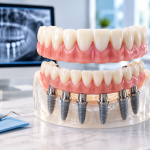

Dental Implants in Redding CA can provide an option for replacing missing teeth and restoring oral function. Dental Implants in Redding CA are designed to replace the tooth root with a small implant that supports a dental restoration. Before treatment, patients should understand how dental implants work, who may be a candidate, what the treatment process involves, and what recovery may look like.
A dental restoration supported by implants can also be designed to provide a stable replacement compared with some traditional tooth replacement approaches. Shasta Family Dentistry provides information about dental care and implant treatment for patients considering their options.
What Are Dental Implants?
Dental implants are small posts, commonly made from titanium or another biocompatible material, that are placed into the jawbone. Once the implant has healed and integrated with the surrounding bone, it can support a replacement tooth or another dental restoration.
A complete implant supported replacement typically involves several components:
- The implant, which serves as the artificial tooth root
- An abutment, which connects the implant to the restoration
- A crown, bridge, or denture, depending on the treatment plan
Unlike a traditional dental bridge, an implant can replace the root of a missing tooth without relying on neighboring teeth for support.
Who May Be a Candidate for Dental Implants?
Not everyone will be immediately ready for implant treatment. An implant dentist will generally evaluate the patient’s oral health, jawbone condition, medical history, and specific tooth loss situation before recommending treatment.
Several factors may be considered, including:
- The number and location of missing teeth
- Jawbone density and volume
- Gum health
- Existing dental conditions
- Oral hygiene habits
- General health factors
- Tobacco use
- Ability to maintain regular dental care
Adequate bone support is particularly important because the implant needs to remain stable while it integrates with the jawbone.
If there is insufficient bone in the area, additional procedures may sometimes be considered before implant placement.
Why Is Bone Health Important?
After a natural tooth is lost, the jawbone around the missing tooth may gradually lose volume because it no longer receives stimulation from the tooth root.
The amount of bone available can influence whether an implant can be placed immediately or whether additional preparation is necessary.
A dentist may use dental imaging to evaluate the bone structure and determine the appropriate position for an implant. The assessment can also help identify important anatomical structures and guide treatment planning.
This is one reason an examination is an important step before deciding whether dental implants Redding are suitable for a particular patient.
How Long Does Treatment Take?
Dental implant treatment does not have one standard timeline. Some patients may complete treatment relatively quickly, while others may require additional procedures that extend the overall process.
Factors affecting the timeline may include:
- Number of implants
- Need for bone grafting
- Gum health
- Healing response
- Type of restoration
- Existing dental conditions
- Individual treatment planning
Patients should ask their implant dentist for an estimated treatment timeline based on their specific circumstances.
What Happens During Dental Implant Treatment?
Dental implant treatment usually takes place over several stages. The exact sequence and timeline depend on the patient’s oral health and treatment plan.
Initial Consultation
The process begins with an examination and discussion of the patient’s dental history and goals. The dentist evaluates the missing tooth area and determines whether implant treatment may be appropriate.
Imaging may be used to examine the jawbone and surrounding structures.
Treatment Planning
If implants are considered suitable, the dentist develops a treatment plan based on the number of missing teeth, available bone, gum condition, and desired dental restoration.
Some patients may require preliminary treatment before implant placement.
Implant Placement
During implant placement, the implant is positioned into the jawbone at the planned location. The gum tissue is then managed according to the procedure.
The implant remains in the jaw while the surrounding bone heals and integrates with it.
Healing and Integration
The healing stage is important because the implant needs to become stable within the jawbone. This process, known as osseointegration, can take several months.
The exact dental implant healing time varies between patients.
Abutment and Restoration
Once the implant has sufficiently healed, an abutment may be connected. The final dental restoration can then be designed and attached.
The restoration may be a crown for a single missing tooth, a bridge for multiple missing teeth, or another type of implant supported prosthesis.
How Do Dental Implants Compare With Other Restorations?
Dental implants are one option for replacing missing teeth, but they are not the only one.
Depending on the patient’s situation, alternatives may include removable dentures or conventional bridges.
Implants differ because they replace the tooth root as well as supporting the visible replacement tooth. This can provide a stable foundation and may help preserve the jawbone around the implant.
However, implants require surgical placement and a healing period. The most suitable option depends on the patient’s oral health, preferences, treatment goals, and clinical circumstances.
How Should You Care for Dental Implants?
Proper care does not end when the final restoration is placed. Patients should continue practicing good oral hygiene and attending routine dental appointments.
Daily care may include:
- Brushing teeth twice a day
- Cleaning between teeth
- Following recommendations for cleaning around the implant
- Attending regular dental examinations
- Receiving professional cleanings when recommended
- Avoiding habits that could damage the restoration
Although an implant itself cannot develop a cavity like a natural tooth, the surrounding gum and supporting tissues still require attention.
Maintaining healthy gums is therefore an important part of long term implant care.
Dental Implants and Overall Oral Health
Replacing a missing tooth is only one part of maintaining good oral health. Patients should continue caring for their remaining natural teeth and gums throughout the implant treatment process.
Regular examinations can help monitor the implant, restoration, surrounding tissues, and other areas of the mouth.
Patients interested in cosmetic dental care can also explore options such as teeth whitening in Redding to learn how different treatments address different smile concerns.
Can Dental Implants Be Used for Multiple Missing Teeth?
Yes, dental implants can be used in different configurations depending on how many teeth are missing.
A single implant may support one crown, while multiple implants may support a bridge or other restoration.
In some cases involving extensive tooth loss, implant supported dentures may also be considered.
The number and position of implants depend on factors such as bone availability, the location of missing teeth, and the type of restoration being planned.
What Should You Ask Before Treatment?
Before beginning dental implant treatment, patients should have a clear understanding of the proposed procedure and expected timeline.
Useful questions may include:
- Am I a suitable candidate for dental implants?
- Do I have enough bone for implant placement?
- Will I need additional procedures?
- How long is the expected healing period?
- What type of dental restoration will be used?
- What are the alternatives?
- What aftercare will I need?
- What symptoms should prompt me to contact the dental office?
Asking these questions can help patients understand the treatment process and make informed decisions.
Final Thoughts
Dental Implants in Redding CA can be an option for patients seeking a stable replacement for missing teeth. However, treatment involves several stages, including evaluation, planning, implant placement, healing, and restoration.
Understanding candidacy, dental implant treatment, recovery, maintenance, and possible alternatives can help patients approach the process with realistic expectations.
For questions about dental implants, treatment planning, or other dental restoration options, Contact us to discuss your dental needs.
Frequently Asked Questions
Q1. How long does it take to recover from dental implant treatment?
Recovery varies depending on the procedure and individual healing response. Initial discomfort may improve within several days, while the implant may require several months to fully integrate with the jawbone.
Q2. Are dental implants permanent?
Dental implants are designed to provide a long term foundation for replacement teeth. However, their longevity depends on factors such as oral hygiene, gum health, lifestyle habits, regular dental care, and the condition of the restoration.
Q3. Do I need enough jawbone for dental implants?
Adequate bone support is generally important for implant stability. If there is insufficient bone, a dentist may discuss additional procedures that could help prepare the area for implant placement.
Q4. Can dental implants replace several missing teeth?
Yes. Depending on the patient’s situation, multiple implants can support individual crowns, bridges, or implant supported dentures. The appropriate configuration depends on the number and location of missing teeth and available bone.
Q5. How should I care for dental implants after treatment?
Patients should maintain good oral hygiene, clean around the implant as instructed, attend regular dental examinations, and follow professional recommendations for ongoing care. Any unusual symptoms should be reported to the dental professional.