

Dental abscess vs. tooth infection: what’s the difference, and does it change what you should do? This article explains how the two are related, the symptoms of each, the risks of waiting, and the emergency treatment options that clear them up.
Here’s the short version. Every abscess is a tooth infection, but not every tooth infection has turned into an abscess yet.
What’s the Difference?
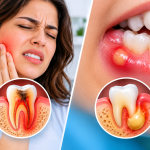
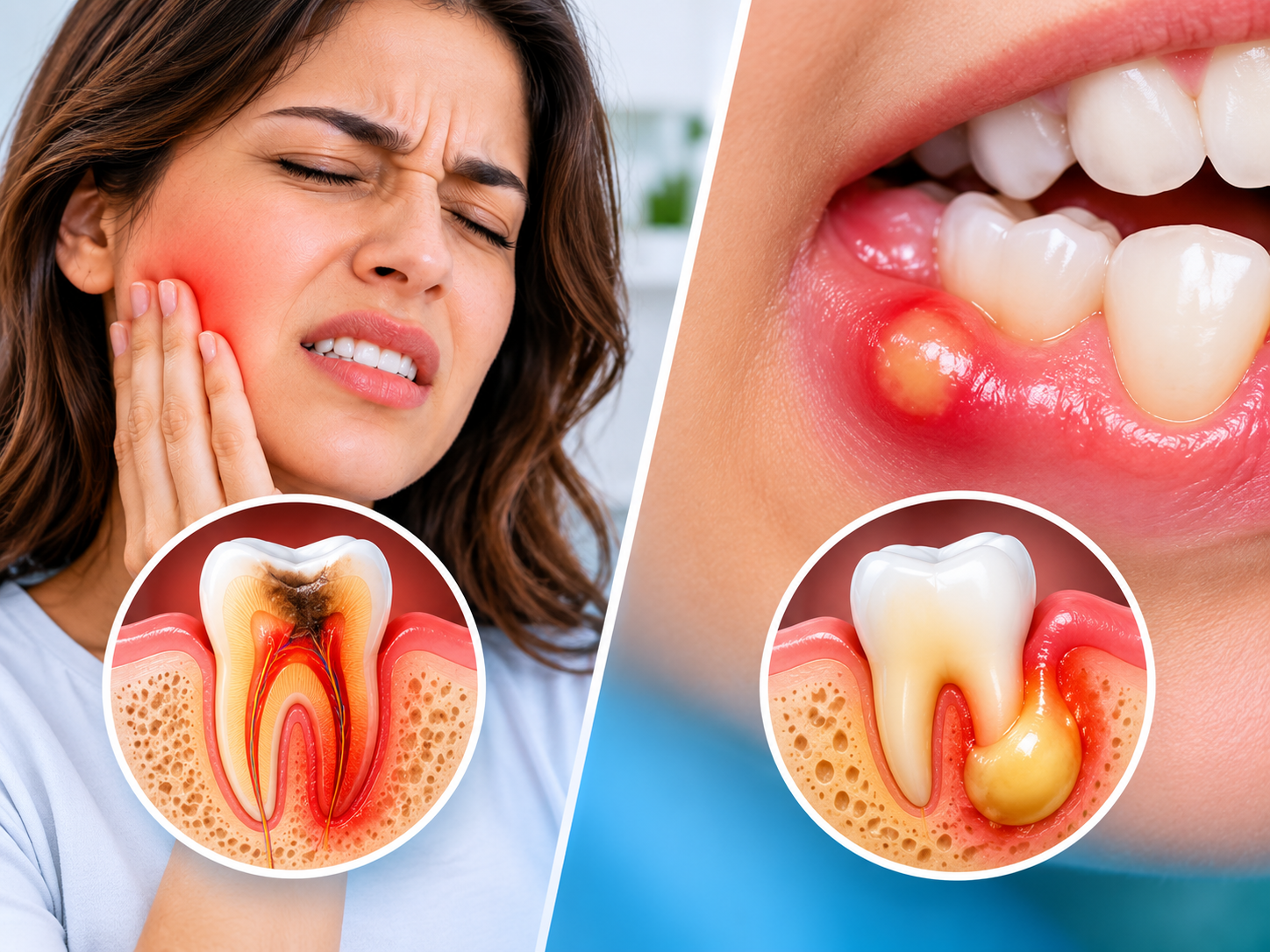
A tooth infection is the broad term. It means bacteria have gotten into the tooth or the tissue around it, usually through a deep cavity, a crack, or gum disease.
A dental abscess is what an infection can turn into. Your body walls the bacteria off, and a pocket of pus forms.
Think of it as stages of the same problem:
- Bacteria get into the tooth or gum
- The nerve or gum tissue gets inflamed and infected
- Pus builds up and forms an abscess
- Without treatment, the infection can spread past the tooth
Where you are on that list decides how urgent it is.
Tooth Infection Symptoms
An early infection can be easy to brush off. Watch for:
- A toothache that throbs or comes and goes
- Sensitivity to hot or cold that hangs around after you stop eating or drinking
- Pain when you bite down on one tooth
- A tooth that’s turning darker than the ones beside it
- Gums that look red or puffy around one tooth
Some infected teeth don’t hurt much at all. That doesn’t mean the infection is gone.
Dental Abscess Symptoms
Once pus has built up, the signs usually get harder to ignore:
- Deep, pounding pain that can spread to your ear, jaw, or neck
- Swelling in your gum, cheek, or jaw
- A pimple-like bump on the gum that may leak pus
- A bad taste or bad breath that won’t go away
- Swollen, tender glands under your jaw
- Fever or just feeling unwell
If the bump on your gum bursts, the pain may drop suddenly. That’s pressure being released, not the infection healing.
The 3 Types of Dental Abscess
Periapical Abscess
This one forms at the tip of the tooth’s root. It usually starts with a deep cavity or crack that lets bacteria reach the nerve.
Periodontal Abscess
This forms in the gum and bone next to the root. It’s often linked to gum disease, where deep pockets trap bacteria. See how we handle gum disease treatment.
Gingival Abscess
This stays in the gum tissue only. Something like a popcorn hull or a bit of food stuck under the gum can set it off.
The type matters because the treatment is different for each. An X-ray and exam tell us which one you have.
What Are the Risks of Waiting?
An abscess won’t drain and heal on its own. Left alone, the infection can:
- Destroy the bone around the tooth
- Spread into your jaw or sinuses
- Damage the tooth so badly that it can’t be saved
- In rare cases, spread into the neck or bloodstream, which can be life-threatening
That last one isn’t common. But it’s the reason swelling should never be a “wait and see” problem.
When to Seek Emergency Dental Care
Call a dentist the same day if you have:
- Swelling in your gum, face, or jaw
- A bump on your gum that’s leaking pus
- Severe pain that over-the-counter pain relievers don’t help
- A fever along with tooth pain
Go to the ER Right Away If You Have:
- Trouble breathing or swallowing
- Swelling that spreads toward your eye or down your neck
- A high fever, confusion, or a racing heart along with facial swelling
These can mean the infection is spreading fast and needs medical care right away.
What Not to Do
A few common home fixes make things worse:
- Don’t pop or squeeze the bump. You can push bacteria deeper.
- Don’t put heat on your face. Warmth on the outside of the cheek can draw the swelling outward.
- Don’t put aspirin on your gum. It burns the tissue.
- Don’t rely on leftover antibiotics. The wrong drug or dose can hide the problem without fixing it.
What can help until you’re seen: rinse with warm salt water, take an over-the-counter pain reliever as the label directs, and hold a cold pack on the outside of your cheek.
Emergency Treatment Options for an Abscess or Tooth Infection
The goal is simple. Get the infection out, then deal with whatever let it in.
Depending on your case, treatment may include:
- Draining the abscess. A small opening lets the pus out, which usually brings fast relief.
- Treating the nerve. If the infection is inside the tooth, we clean out the infected pulp and seal the tooth so it can be saved.
- Deep cleaning. For a periodontal abscess, we clean out the gum pocket and the root surface.
- Removing the tooth. If it’s too damaged to save, taking it out removes the source. Here’s what to expect from oral surgery at our office.
- Antibiotics. These help when the infection is spreading or you have a fever. On their own, they don’t clean out the tooth, so the infection often comes back.
After a nerve treatment, a back tooth usually needs a crown to protect it. Our in-office milling machine lets us make some crowns the same day.
If the tooth has to come out, we’ll go over ways to replace it, including dental implants.
What to Expect at Your Visit
- We ask about your symptoms and look at the tooth and gums.
- We take digital X-rays. If we need to see the roots and bone in more detail, we use our cone beam CT scanner.
- We explain what we found, your options, and the cost before anything starts.
- We treat the infection and plan any follow-up work.
Nervous about the chair? Ask about IV sedation when you call.
Learn more about emergency dentistry at our office. If your tooth mostly hurts after dark, read our guide to severe tooth pain at night.
Emergency Dentist in Redding and Palo Cedro: Insurance and Payment
- Insurance: We accept Delta Dental and Cigna. We don’t accept HMO plans, Medicare plans, or Medi-Cal/Medicaid. We’ll check your benefits for you.
- Financing: CareCredit, Cherry, and Proceed Finance offer monthly payment plans.
- Payment: We take cash, personal checks, and most major credit cards.
See your insurance and financing options.
Our offices:
- 2950 Eureka Way, Suite C, Redding, CA 96001 · (530) 222-0515
- 9461 Deschutes Rd, Suite 2, Palo Cedro, CA 96073 · (530) 547-5757
Quick Answers
Can a tooth infection go away on its own? No. The pain may come and go, but the bacteria stay until the source is treated.
How fast can an abscess get worse? It varies. Some stay small for weeks, others spread in a few days. Swelling is the sign to act quickly.
Can I just take antibiotics? They can calm the infection for a while. But they can’t clean out the inside of the tooth or a gum pocket, so it usually comes back.
Does a burst abscess mean it’s healed? No. Draining relieves pressure, but the infection is still there and needs treatment.
Conclusion
A tooth infection is bacteria in or around the tooth, and an abscess is what happens when that infection forms a pocket of pus. Swelling, a gum bump, fever, or pain that spreads are signs you need emergency dental care, and breathing or swallowing trouble means the ER. Treatment drains the infection and fixes the source, which often saves the tooth when it’s done early.
Think you have an abscess or tooth infection? Book an appointment or call our Redding office at (530) 222-0515 or Palo Cedro at (530) 547-5757. Have a question about your symptoms? Leave it in the comments, or explore the conditions we treat. For more Visit us.